
Factories, plants and logistics · Servicing and maintenance
Industrial Generator Servicing & Maintenance Across Gauteng
Industrial generator maintenance and servicing on site for three-phase diesel sets on prime and standby duty at factories, processing plants, logistics hubs and large warehouses, usually from about 500 kVA to well beyond 1,000 kVA. Sets are serviced by running hours or by the calendar, booked into your shutdown window and quoted in writing first. For a set that has failed mid-shift, go to our industrial repairs page.
Callout fee waived when you accept our written quote. 1-year workmanship guarantee. See prices
- Serviced by running hours
- Shutdown windows agreed first
- 1-year workmanship guarantee
- Onsite across Gauteng
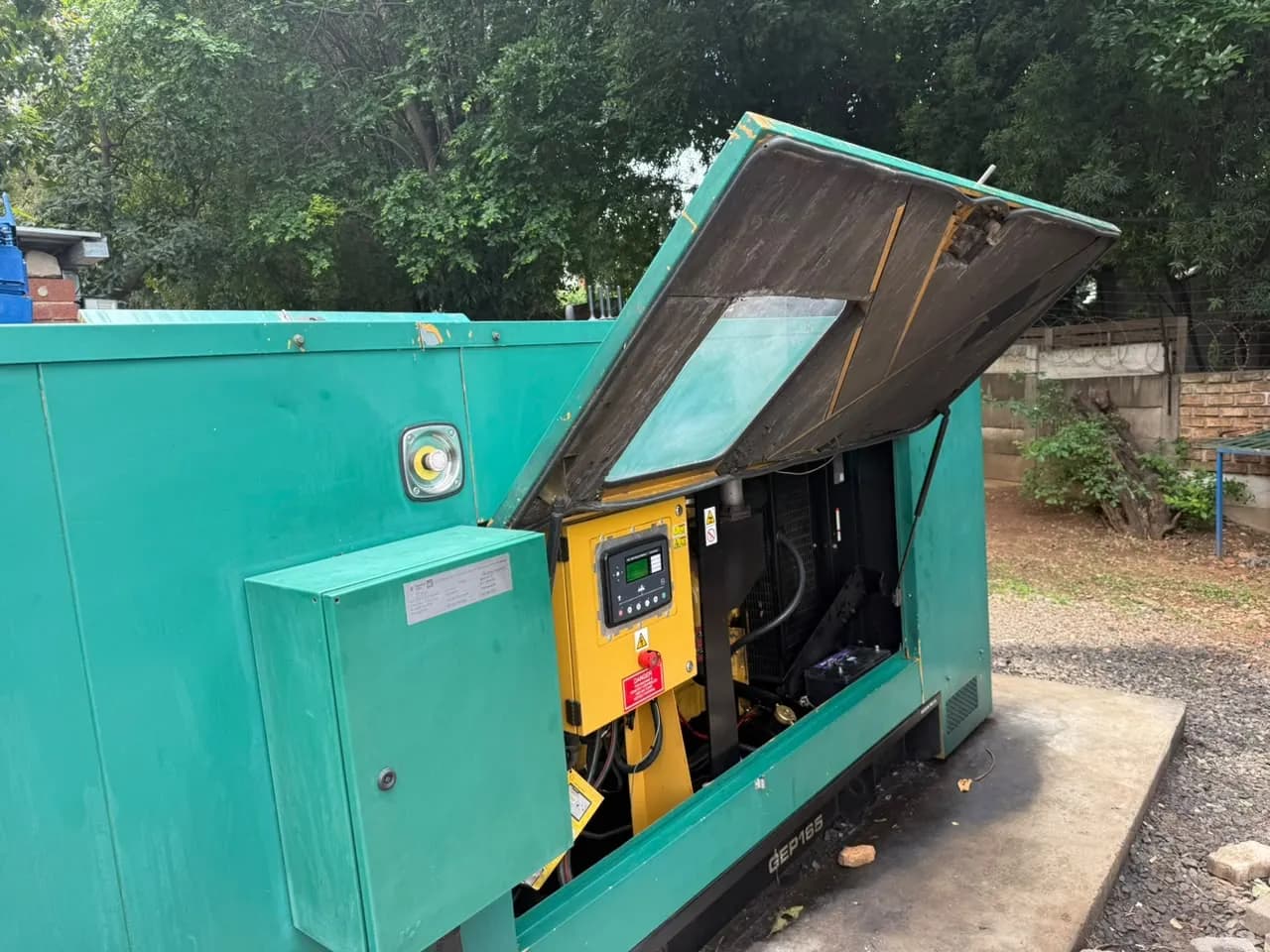
Hours, duty and downtime
What industrial plant needs from a maintenance programme
Duty sets the rhythm. A standby set waits for a mains failure and may log very few hours, so the calendar decides when it is due. A prime set runs as the main supply through long shifts and reaches its hour limit first, sometimes within weeks of the last stop. Before we propose a programme we confirm which duty each set on the site carries.
Each visit is planned like any other job on the plant. We agree the permit to work, the isolation points, who meets us, any lifting or crane access and the production window with your maintenance engineer or production manager before the date is fixed, so the set comes off line only for as long as the work needs. We maintain industrial sites across Gauteng, from the East Rand and Midrand to Pretoria and the West Rand.
Bulk diesel needs watching on a large site. Condensation adds water, water feeds diesel bug, and the first sign is often a filter that blocks under load. Fuel condition is part of the programme, and every visit adds an entry to your maintenance file: date, running hours, work done, parts fitted, readings and findings.
Maintenance contracts and service level agreements (SLAs) are customised for each client. We inspect and assess the generator, its condition, capacity and usage, and your requirements, then quote the plan in writing. There are no fixed packages or prices.
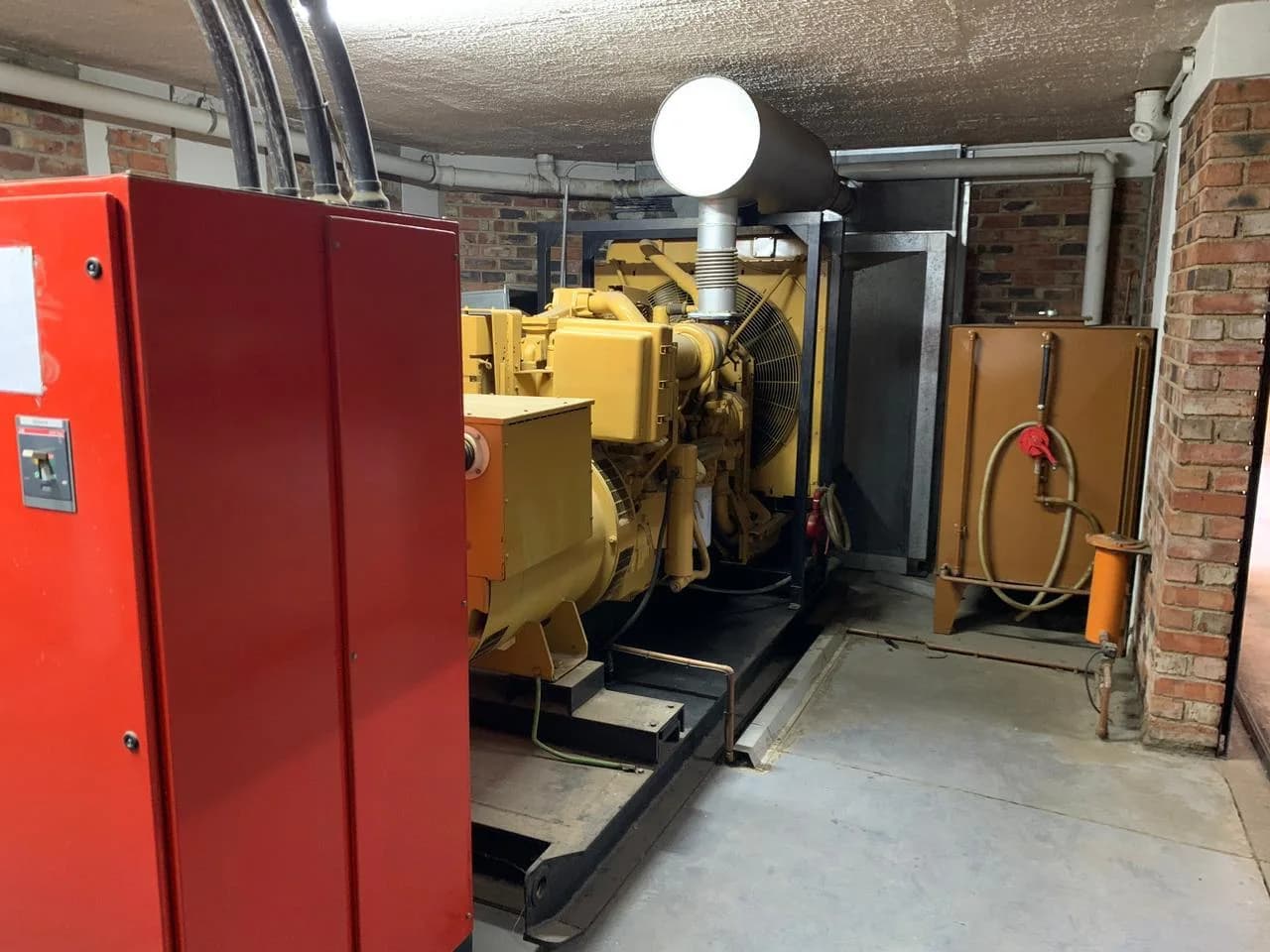
The programme
What industrial generator maintenance covers
A large set has more systems to keep in step than a building standby unit. These are the parts of the plant the programme looks after.
Minor services by running hours
Oil, oil filter, fuel filters and the water separator are changed at the hour interval your engine maker sets, logged against the hour meter.
Major services at longer intervals
Larger services fall at the engine maker’s longer hour marks and cover more of the engine. We plan them from the manual and the hours already logged.
Coolant, hoses, belts and radiator
After long runs we check coolant condition, hoses, belt tension and the radiator core, since heat is what ends a prime-duty shift early.
Exhaust, silencer and heaters
We look over the exhaust run, silencer mountings and any engine heaters where fitted, and note anything that needs attention before it affects the set.
Alternator checks
Output and terminal connections are checked at each service, and deeper alternator testing is quoted separately when a reading looks wrong.
Controller logs and AMF settings
We read alarm logs, service counters and AMF settings on Deep Sea, ComAp, SmartGen and Datakom controllers and reset the counter once the work is done.
Bulk-tank fuel condition
Water and sediment are checked and drained from the day tank and bulk storage, with fuel polishing quoted when draining alone will not save the diesel.
Batteries and chargers on the skid
Starting batteries are tested under load and the charger is checked, because a large engine needs strong cranking to start first time on a mains failure.
A record for each set
Every set on the site has its own record of date, running hours, work done, parts fitted, readings and findings, filed for your maintenance engineer.
Published terms
The terms an engineer can check before signing
These terms apply to every maintenance client. Your contract adds the schedule and the scope for your plant.
- Hours
- Open 24 hours a day, 7 days a week, including weekends and public holidays.
- Quotes
- A written quote is given before work starts and is valid for 14 days. If more work is found once the job is under way, it is explained and not done without your approval.
- Breakdowns between visits
- If the generator breaks down between visits, contract clients are scheduled ahead of new callouts.
- Repair rates
- Preferred labour rates may apply to repairs on sets covered by a contract, and every repair is still quoted in writing first.
- Notice period
- Either party can end a maintenance contract with 30 days’ notice.
- Workmanship
- Workmanship is warranted for 1 year from completion, as set out in the terms. A fault directly related to the work is inspected again in that period. Parts follow the supplier warranty where one applies.
Servicing rhythm by duty and site
Published intervals vary with the engine and its duty. The figures below are the ones our guides cite, with their sources on the linked pages. Your own engine’s manual gives the exact figure for your set.
| Duty or site | What sets the rhythm | Read more |
|---|---|---|
| Prime set running as the main supply | Running hours. Perkins publishes a minor service every 500 hours, with major services at 1,000, 2,000, 3,000 and 4,000 hours. | Diesel maintenance checklist |
| Standby plant that waits for a mains failure | The calendar first, brought forward when long outages add hours. A set that rarely runs still ages. | Generator service intervals |
| Set in continuous emergency use | FEMA course material gives an oil and filter change every 240 operating hours for diesels in continuous emergency use. | How often to service a generator |
| Set with no service history | We note the hour reading and begin with a full service, so the programme counts forward from a known point. | Generator running hours |
| Load bank proof | When the plant load is too valuable to test on, a load bank proves capacity in steps. Our cost guide puts load bank testing at R2,800 to R5,500. | Load bank testing |
Warning signs
Signs an industrial set needs a visit before the next service
Do not wait for the hour meter if the plant shows any of these. Each one is cheaper to deal with on a planned stop than in the middle of a run.
01
A temperature trip under production load
The set shut down hot while carrying the plant, which points at coolant, airflow or a radiator pack that needs cleaning.
02
Fuel starvation only under load
It idles happily but loses power or stops as the load builds, the classic sign of filters or a supply that cannot keep up.
03
Voltage sags when the real load arrives
Output looks fine unloaded and drops once motors and process equipment come on, so the alternator and its regulation need checking.
04
Frequency hunting
The frequency wanders up and down on a steady load. Frequency follows engine speed, so fuel delivery and speed control come first.
05
Black smoke or a wet exhaust
Long periods at light load leave unburnt fuel in the exhaust. The set needs a run on proper load and a look at what caused it.
06
A service-due warning on the controller
The controller’s maintenance counter has run out and the warning is showing, often on a set nobody has had time to stop.
07
Water in the separator or old fuel in the tank
Water in the bowl or diesel that has stood in bulk storage for a long time needs attention before it reaches the injection system.
08
Passed unloaded, failed in production
A test start in the yard went well and the set still could not carry the plant, so a loaded test is due before the next outage.
09
Hours piled up during a long outage
A standby set that ran for days on end may now be past its hour interval even though the calendar says it has months to go.
Related Pages
Industrial repairs, intervals and testing
- Industrial Generator Repairs Breakdowns and faults on large plant
- Load Bank Testing Stepped load and recorded readings
- Generator Maintenance How contracts and SLAs are set up
- Diesel Servicing & Maintenance Servicing by engine type
- Commercial Servicing & Maintenance Offices, shops and complexes
- Diesel Maintenance Checklist Daily, weekly and hourly tasks, sourced
- Standby vs Prime Why duty changes the programme
- Generator Running Hours Reading the meter and planning ahead
- Contaminated Diesel Water and diesel bug in stored fuel
- Generator Overhaul When servicing is no longer enough
- Alternator Repairs Output and winding faults
- Generator Controllers Alarm logs and AMF settings
Common Questions
Questions about industrial generator maintenance
How is industrial generator maintenance different from commercial servicing?
Industrial maintenance is built around heavy three-phase plant, often on prime duty, serviced by running hours inside agreed shutdown windows with permits and isolation. Commercial servicing looks after the single standby set of an office, shop or complex, planned around trading hours and tenants.
Do you service generators by running hours or by the calendar?
Both, depending on the duty. Prime sets are serviced at the engine maker’s hour intervals because they reach them first. Standby plant is serviced on the calendar and brought forward after long outages.
Can servicing be scheduled in our shutdown window or between shifts?
Yes. We are open 24/7, so a service can fall on a night shift, a weekend or a public holiday. We confirm the window, the permit and the isolation with your engineer before the date is fixed.
What does an industrial generator SLA include?
Your SLA is written after we assess the plant. It sets out the visit schedule by hours or by date, the work on each visit, any load testing and the records kept for each set. Breakdown priority, repair rates and the notice period follow the published terms listed above.
Do you load bank test large sets?
Yes. Send the kVA rating, the voltage and where the set stands, and we confirm the test gear and the steps before the date. The readings at each step are recorded for your maintenance file.
Do you service prime-power generators that run all day?
Yes. A prime set can reach its service interval in a matter of weeks, so we schedule visits from the hour meter and your production plan and agree the next stop with you before the meter gets there.
Which controllers and alternators do you maintain?
We work on Deep Sea, ComAp, SmartGen and Datakom controllers and on Stamford, Leroy-Somer and Mecc Alte alternators, among others. ProService Generator Repairs is an independent generator service and repair company.
Can stored diesel and bulk tanks be checked as part of maintenance?
Yes. We check day tanks and bulk storage for water and sediment and drain what the separator and tank have collected. If the diesel needs more than that, fuel system cleaning and polishing is typically R1,500 to R3,500, quoted in writing first. Some tanks need a specialist contractor for cleaning.
Still unsure what the fault is? Call or WhatsApp 082 057 4605 for onsite diagnosis.
Service Areas
Servicing & maintenance across Gauteng
Servicing and maintenance visits are booked for a time that suits you. Choose your area for the suburbs, site types and plans we cover there.
- Generator servicing & maintenance in Johannesburg
- Generator servicing & maintenance in Sandton
- Generator servicing & maintenance in Randburg
- Generator servicing & maintenance in Midrand
- Generator servicing & maintenance in Roodepoort
- Generator servicing & maintenance in Pretoria
- Generator servicing & maintenance in Centurion
- Generator servicing & maintenance on the East Rand
- Generator servicing & maintenance in Kempton Park
- Generator servicing & maintenance on the West Rand
What to send before we attend
These details help us plan the visit and bring the right parts. Send what you can on WhatsApp; if you can’t find the model number, we still book the visit.
- Location
- The suburb or site, so the visit can be booked in the right area.
- Make and model
- The generator brand and model, if they are known.
- kVA
- The size printed on the data plate.
- Fuel type
- Diesel, petrol, LPG, natural gas, or dual-fuel.
- Controller model
- The module name on the panel, when it is visible.
- Fault or alarm
- What the set does, and any text on the screen.
- Photos
- The generator, the data plate, and the controller or alarm. Send these on WhatsApp.
Book a Visit
Arrange industrial generator maintenance
Send the kVA, the engine and alternator make, the duty, the hour reading, your shutdown window and how we reach the set. We reply with a proposed date and a written quote.
- Call
- 082 057 4605
- Message us on WhatsApp
What happens next
- We reply with questions about the generator, or to book a visit.
- A technician comes to you at the booked time.
- The fault is diagnosed on site and you get a written quote. No work starts until you accept it.
Charlie, lead technician: Degree in Mechanical Engineering, Degree in Electrical Engineering, Diesel Plant Fitter. Generator specialists since 2000.