
Duty ratings
Standby vs Prime Generator: What's the Difference?
Standby and prime are duty ratings, not two styles of canopy. A standby rating is for backup when the normal supply fails. A prime rating is for use as a main source, with a varying load, for the hours that rating allows. The plate, and the manufacturer’s definition for that model, decide which one you have. Those definitions are not identical across brands, so this page does not replace them with one universal hour limit.
- Ratings are on the plate
- Brands do not share one definition
- Continuous is a third idea
- Onsite across Gauteng
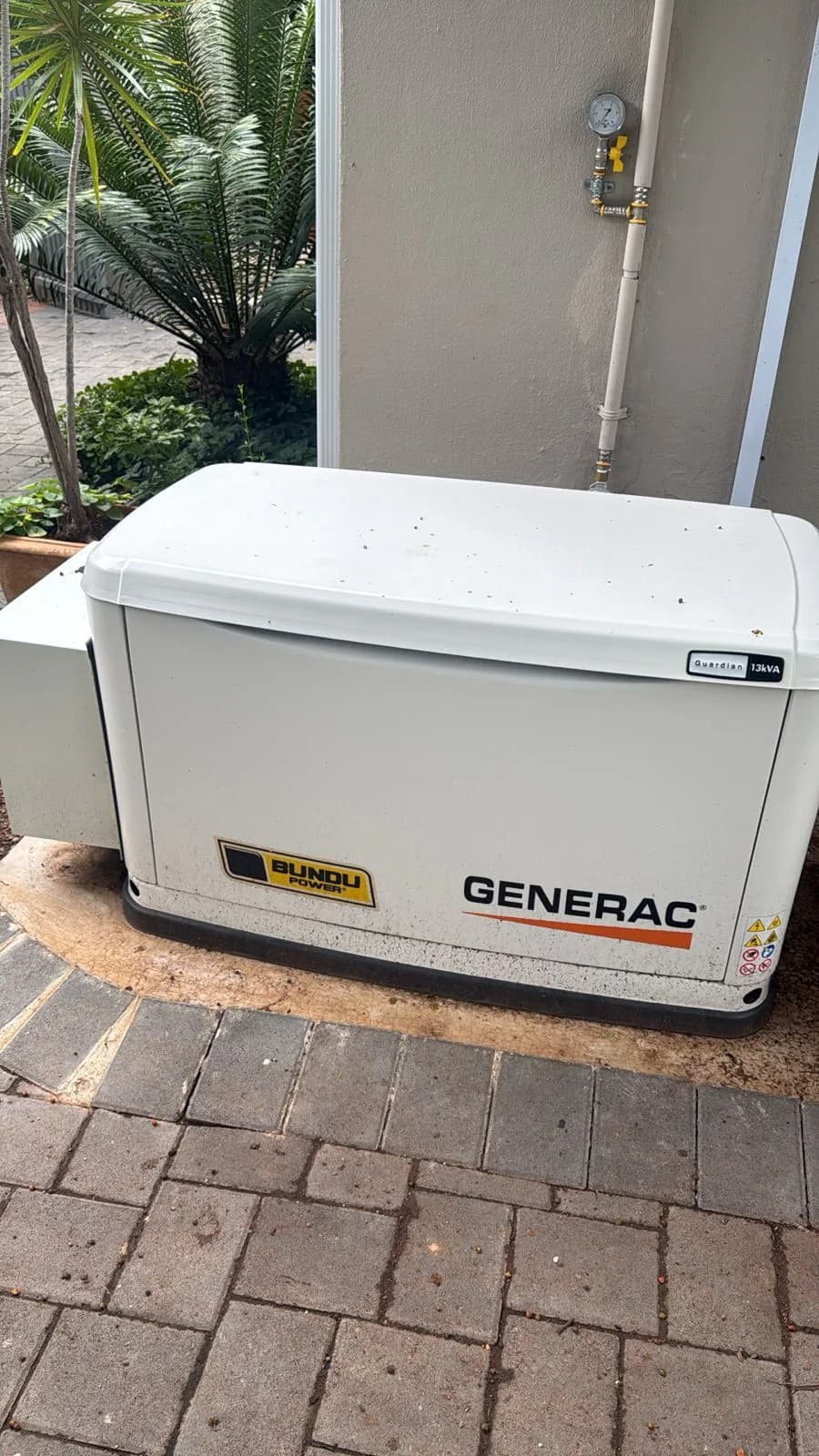
Backup versus a main source
What is a standby generator?
A standby set is expected to start when the mains fails, carry the load for that outage, and stop when mains returns. The load may vary. The manufacturer’s standby rating assumes that pattern, including whatever annual-hour limit that manufacturer publishes. We do not reprint one brand’s hour cap as if it applied to every set.
A prime-rated set is expected to run as a primary source with a varying load. Again, the allowable load and hours are the manufacturer’s. Some plates also show a continuous, or base-load, rating for a steady load over long periods. If the plate shows more than one kVA, each figure belongs to a named duty. Do not pick the larger number and ignore the duty next to it.
Using a standby-rated set as an all-day power source can take it outside the rating it was sold with. Whether a particular set may do that is a manufacturer question, answered from the plate, not from the fact that the engine will physically run.
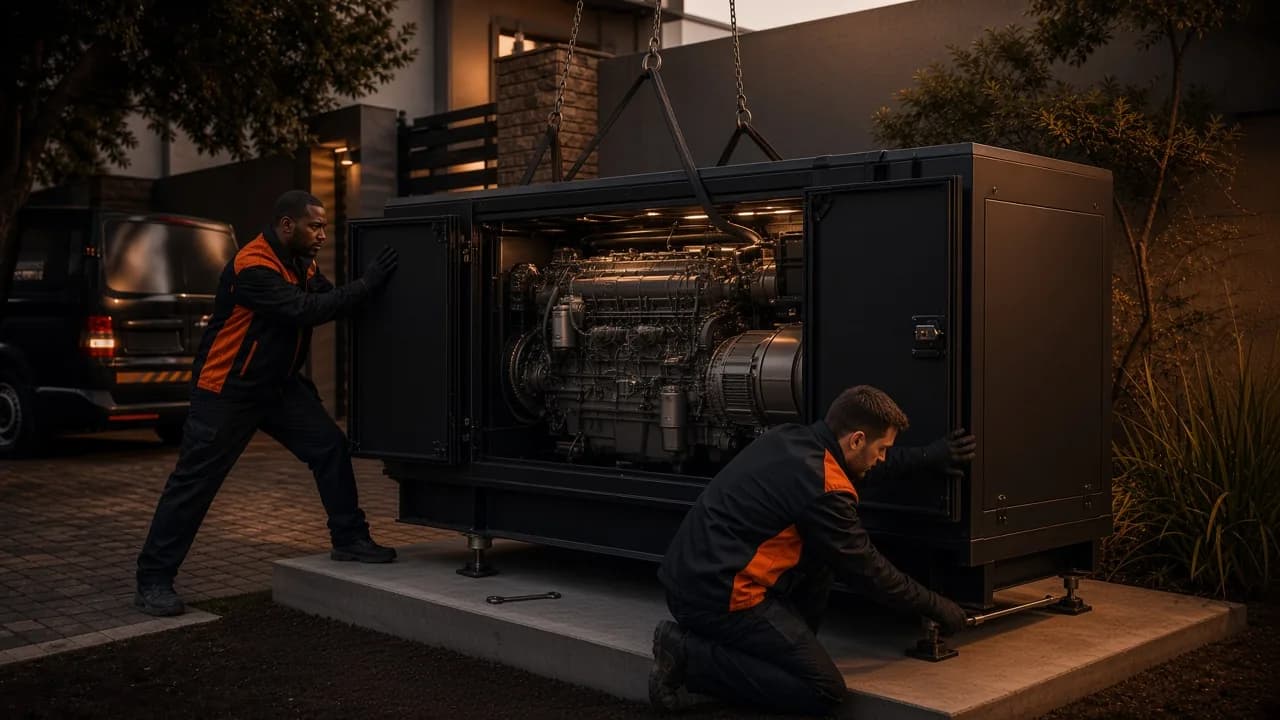
Load, hours and sites
Why the duty rating changes the visit
Prime generator use
The set is the supply, not the backup. Hours accumulate quickly, so service intervals are reached on the hour clock more often than on a standby set that waits.
Load variation
Standby and prime ratings generally assume the load is not a single flat figure all day. A continuous rating, where printed, is the one aimed at steady load. Check which words are on the plate.
Running hours
Duty decides how fast hours build. The running-hours page explains the meter. The intervals page explains how those hours book the next service.
Generator sizing
A standby kVA and a prime kVA on the same machine are different numbers. Sizing a building from the standby figure, then running the set as prime, uses the wrong rating.
Maintenance differences
More hours mean filters and oil come due sooner. A standby set still needs calendar maintenance. Neither duty cancels servicing.
Commercial and industrial use
Offices often want standby. A plant that runs on the generator for production is closer to prime or continuous duty. The application does not rename the plate. The plate has to match the application.
Standby and prime at a glance
A comparison of ideas. Hour limits and load percentages differ by manufacturer. Read the data plate rather than this table for a specific set.
| Question | How the duties differ |
|---|---|
| Typical role | Standby backs up the mains. Prime is a main source with a varying load. |
| When it runs | Standby runs in outages. Prime runs whenever that supply is required. |
| Rating on the plate | The kVA next to the word standby is not the kVA next to the word prime. |
| Continuous rating | Some plates add a continuous figure for steady load. It is a third number, not a synonym for prime. |
| Service timing | Prime hours usually arrive sooner. Standby sets are often limited by the calendar as well. |
Typical role
Standby backs up the mains. Prime is a main source with a varying load.
When it runs
Standby runs in outages. Prime runs whenever that supply is required.
Rating on the plate
The kVA next to the word standby is not the kVA next to the word prime.
Continuous rating
Some plates add a continuous figure for steady load. It is a third number, not a synonym for prime.
Service timing
Prime hours usually arrive sooner. Standby sets are often limited by the calendar as well.
Related Pages
Sizes, hours and site types
- Generator SizeskVA bands and what the plate means
- Running HoursHow use shows up on the meter
- Service IntervalsWhy duty changes the next visit
- Commercial Generator RepairsOffices, retail and complexes
- Industrial Generator RepairsLarger sets and heavier duty
- Generator InstallationChoosing duty before a new set is placed
Google reviews of ProService Generator Repairs
Google Review
They serviced our residential standby unit in Pretoria East perfectly. Their workmanship is extremely neat, and they are the only company we trust for our properties.
Google Review
Baudouin engines are heavy-duty beasts, and this team services our 1000kVA unit perfectly, resolving a persistent cooling issue that other contractors couldn't figure out.
Common Questions
Questions about standby and prime ratings
What is the difference between standby and prime?
Standby is a backup rating for when the normal supply fails. Prime is a rating for use as a main source with a varying load. The plate defines which applies.
Can a standby generator run all day?
Only if that manufacturer’s rating allows the hours and the load. Many standby ratings are not written for continuous use. Check the plate rather than assuming the engine can simply keep going.
Is prime the same as continuous?
No. Continuous, where a manufacturer uses it, is aimed at a steady load. Prime generally allows the load to vary. The words on the plate are the definition that counts.
Why do some plates show two kVA figures?
Because each figure belongs to a duty. The higher number is not a free upgrade. It applies only to the duty printed beside it.
Does the duty change servicing?
Yes. More running hours bring hour-based services forward. Standby sets still need time-based servicing while they wait.
We use the generator for a shop during outages. Is that standby?
That pattern is what standby ratings are for, subject to the hour and load limits on the plate. Long daily running would need the prime or continuous figure checked.
Does a factory automatically need a prime set?
Not from the word factory. If the generator is only for outages, standby may be the duty. If production runs on the generator, the plate has to be rated for that use.
Where do I read the duty?
On the generator data plate, next to the kVA figures. The data-plate guide lists the fields. Not every plate prints every duty.
Still unsure what the fault is? Call or WhatsApp 082 057 4605 for onsite diagnosis.
Service Areas
Onsite visits across Gauteng
Technicians travel to the generator. These are the main Gauteng areas. Suburb pages sit under each region.
What to send before we attend
ProService Generator Repairs confirms an onsite visit from these details. Send what you have. A missing model number does not stop the booking.
- Location
- The suburb or site, so the visit can be booked in the right area.
- Make and model
- The generator brand and model, if they are known.
- kVA
- The size printed on the data plate.
- Fuel type
- Diesel, petrol, LPG, natural gas, or dual-fuel.
- Controller model
- The module name on the panel, when it is visible.
- Fault or alarm
- What the set does, and any text on the screen.
- Photos
- The generator, the data plate, and the controller or alarm. Send these on WhatsApp.
Book a Visit
Send the rating plate
A photo that shows the standby or prime kVA is the useful one. Describe how the set is actually used.
- Call
- 082 057 4605
- Message us on WhatsApp