
Generator sizes
Generator Sizes We Repair, Service & Maintain
ProService Generator Repairs works across a wide span of generator sizes in Gauteng, from portable petrol frames to large standby plant. The bands below are a guide. A set does not have to sit neatly inside one of them before it can be booked.
- Portable through large plant
- Single-phase and three-phase
- Onsite across Gauteng
How size is read
What generator size do I have?
The useful number is the kVA rating on the generator, not a guess from the canopy size. It is usually on the data plate, the controller screen, or the specification sheet that came with the set. A photo of that plate is enough to start a booking.
kVA is apparent power. kW is real power. The two are related by power factor, which is often around 0.8 on a standby set, but it is not a rule you should apply without reading the plate. A 100 kVA generator is not automatically a 100 kW generator.
Actual sizing for a building depends on the connected load, the starting current of motors, single-phase or three-phase supply, refrigeration, lifts, pumps, UPS systems, sensitive electronics, room for later equipment, and whether the set is standby or prime power. Those factors decide whether a nameplate is enough for the site.
Size bands
Common generator size bands
These ranges describe sets we are commonly asked to repair, service and maintain. They overlap, and a generator can sit between them.
Portable and small
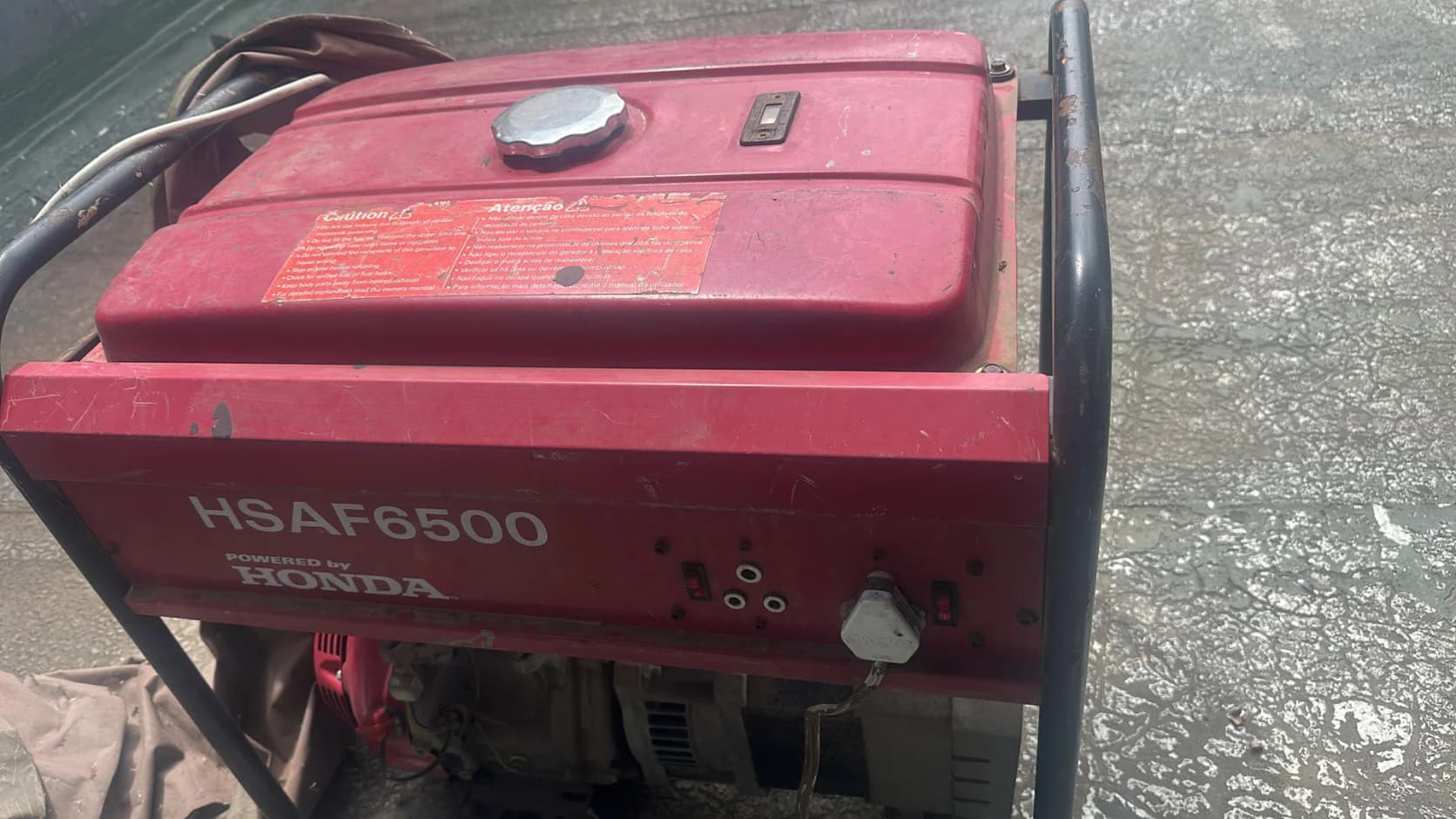
About 1 kVA to 10 kVA. Often petrol, used at a house, a small site or as a backup frame.
Residential and small business
About 10 kVA to 30 kVA. House standby and smaller shops, sometimes diesel, sometimes petrol.
Commercial
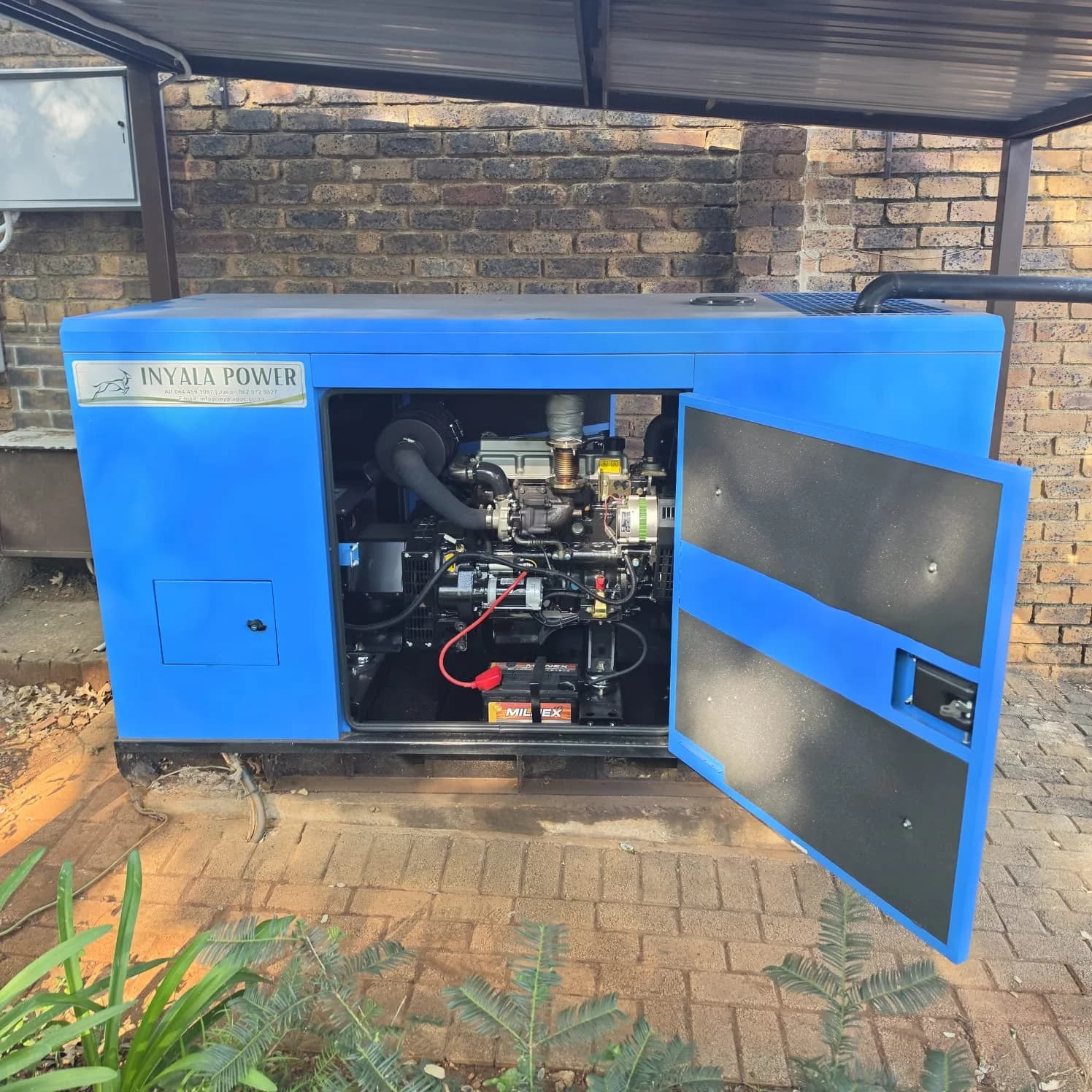
About 30 kVA to 100 kVA. Offices, retail and sites with several circuits and motor loads.
Large commercial
About 100 kVA to 500 kVA. Bigger buildings, plant rooms and sets that carry a wider load.
Industrial
About 500 kVA to 1,000 kVA and above. Heavy standby plant. Access, lifting and test gear are part of the visit plan.
Large industrial and standby plants
1 MVA and above, where that is the installation. Booked as plant work, not as a portable callout.
What changes the job
Why correct generator sizing matters
A generator that is too small for the starting load trips, overheats or drops frequency. A set that is far larger than the load can also run poorly if it never sees a meaningful load.
Starting current
Motors, pumps, lifts and compressors draw more current at start than they do once they are running.
Single-phase or three-phase
The plate and the building supply have to match. A three-phase set is not a cure for a single-phase board, or the reverse.
Sensitive loads
UPS systems, refrigeration controls and electronics need stable voltage and frequency, not only enough kVA on paper.
Future equipment
A set sized only for today’s lights can be short once more plant is added.
Standby or prime
A set kept for outages is used differently from one that runs as the main supply. Service and loading follow that duty.
The plate still leads
Canopy size, noise and fuel tank volume are not a substitute for the kVA rating.
How size changes the work
Small, commercial and industrial generator work
Small generator repairs
Portable and house sets are usually a start, fuel, battery or output visit. Petrol frames are booked on the petrol repair page when that is the fuel.
Commercial generator repairs
Office and retail sets add controllers, changeover and a larger fuel system. The fault is still tested before parts are listed.
Industrial generator servicing
Larger diesels need filters, coolant, batteries and a running check planned around access. The interval follows the maker and the hours, not a single company timetable.
Large standby generator maintenance
Readiness on a set that sits is batteries, heaters, coolant, fuel condition and a start under a real or test load.
Generator size and load testing
A start in the yard does not prove the set can carry the building. Load bank testing is arranged when the question is capacity, not only whether it fires.
Generator size and ATS systems
The transfer switch has to suit the generator and the board. A controller alarm and a failed transfer are electrical jobs, not a reason to change the kVA on paper.
Google reviews of ProService Generator Repairs
Google Review
Cummins engines require absolute precision, and their mechanics delivered exactly that during our 500kVA service, using genuine filters and providing a comprehensive diagnostic engine report.
Google Review
We suspected our aging plant was losing capacity, so they performed a load bank test. The detailed graphical report proved the alternator was struggling, allowing us to upgrade proactively.
Common Questions
Generator size questions
What size generators do you repair?
A wide range, from small portable sets through commercial machines to large industrial standby plant. The booking starts with the kVA on the plate, the fuel and the fault.
Can you service generators above 500 kVA?
Yes, when the set can be worked on site and the parts and access suit the job. Share the kVA and a photo of the installation when you book.
How do I find my generator's kVA rating?
Read the data plate on the alternator or canopy, or the rating shown on the controller. A clear photo of that plate is the fastest way to send it.
What is the difference between kVA and kW?
kVA is apparent power and kW is real power. They are linked by power factor, so the two numbers on a plate are not interchangeable.
Can you service both single-phase and three-phase generators?
Yes. Tell us which one it is, because the output checks and the building supply are different.
Can a generator be too small for a building?
Yes. If motors, lifts or the full board pull more than the set can start and hold, it trips, slows or overheats. That is a sizing problem, not only a repair.
Can you test whether my generator can carry the building load?
A running test shows it starts and produces voltage. A load bank test is the separate check when you need to know whether it can carry a defined load.
Do these size bands cover every generator?
No. They are a guide. A set between two bands, or built for a special duty, is still booked from its plate and its fault.
Still unsure what the fault is? Call or WhatsApp 082 057 4605 for onsite diagnosis.
Related Pages
Repairs, servicing and load testing
- Generator RepairsFault diagnosis on site
- Generator ServicingOil, filters and inspection
- Generator MaintenanceKeeping a standby set ready
- Load Bank TestingCapacity under a test load
- Diesel Generator RepairsStandby and commercial diesels
- Petrol Generator RepairsPortable and small petrol sets
- Gas Generator RepairsSupported gas and dual-fuel sets
- kVA to kWApparent power and usable power
- Single-Phase vs Three-PhaseMatch the generator to the board
- Commercial Generator RepairsBusiness premises and standby sets
- Industrial Generator RepairsLarger diesel and high-load sets
- ContactSend the plate and the fault
Service Areas
Onsite visits across Gauteng
Technicians travel to the generator. These are the main Gauteng areas. Suburb pages sit under each region.
What to send before we attend
ProService Generator Repairs confirms an onsite visit from these details. Send what you have. A missing model number does not stop the booking.
- Location
- The suburb or site, so the visit can be booked in the right area.
- Make and model
- The generator brand and model, if they are known.
- kVA
- The size printed on the data plate.
- Fuel type
- Diesel, petrol, LPG, natural gas, or dual-fuel.
- Controller model
- The module name on the panel, when it is visible.
- Fault or alarm
- What the set does, and any text on the screen.
- Photos
- The generator, the data plate, and the controller or alarm. Send these on WhatsApp.
Book a Visit
Send the kVA and the fault
A photo of the data plate, the fuel type and what the generator is doing is enough to arrange a visit across Gauteng.
- Call
- 082 057 4605
- Message us on WhatsApp