
Coolant leaks
Generator Coolant Leak Repairs
Coolant on the floor, a falling level, or a sweet smell around a hot generator means coolant is leaving the system. The puddle does not name the part. Possible sources include the radiator, a hose, a clamp, the water pump, the thermostat housing, a fitting, the expansion tank, a seal or a pipe. Not every loss is an external leak.
- The puddle is not the diagnosis
- Internal loss is considered
- Hot caps stay closed
- Onsite across Gauteng
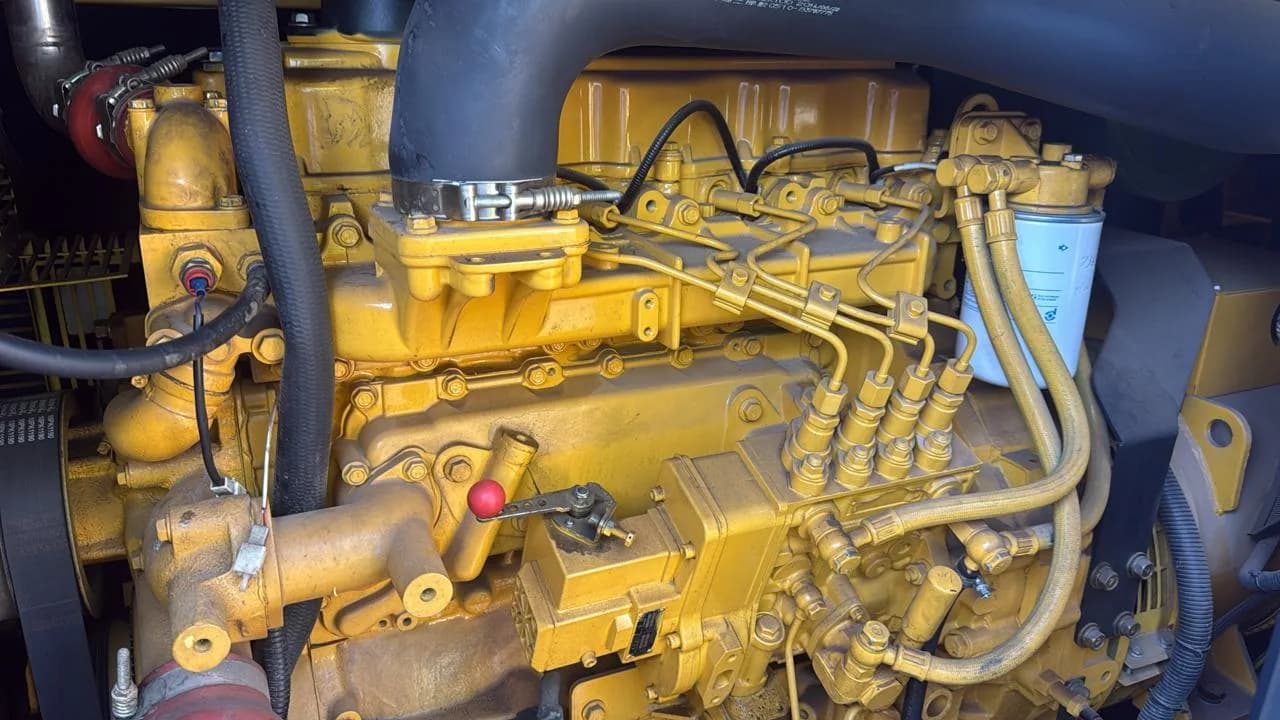
Where the coolant went
Why is my generator losing coolant?
Because it is escaping, or because it is being consumed. An external leak leaves a mark, a drip or a stain. Coolant that disappears with no puddle can be entering the engine, evaporating from a hot joint, or leaving through a path that only opens under pressure.
Possible external points are the radiator core and tanks, hoses and clamps, the water-pump weep, the thermostat housing, fittings and the expansion tank. The cooling-system page covers circulation when the system is full and still overheats.
Topping up and running a leaking set empties it again and can end in an overheat shutdown. The leak is found with the engine cool enough to inspect. A hot pressurised cap is not opened to look.
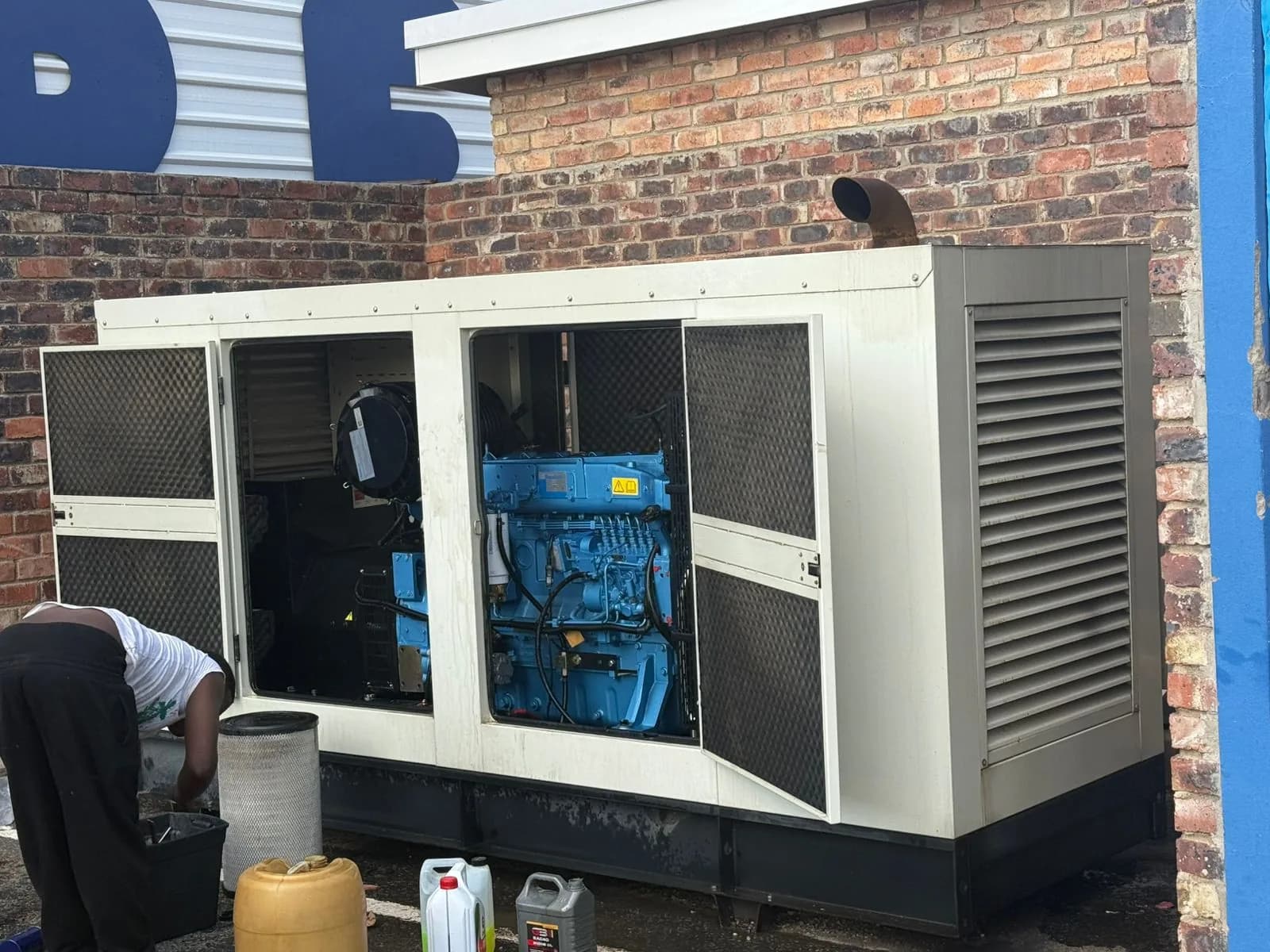
External drips and hidden loss
Radiator, hose, pump and housing leaks
Radiator leaks
Cores, end tanks and seams weep. A damp fin is not always the source. The trail is followed back, including joints above the stain.
Coolant hose leaks
A split hose, a perished end or a clamp that has relaxed leaks most when the system is hot and under pressure.
Water pump leaks
A pump weep hole or a failed seal leaves coolant at the front of the engine. That is different from a radiator seam.
Thermostat housing leaks
The housing joint and its gasket leak at the top of the cooling circuit. It is checked with the hoses, not assumed from a wet engine.
Coolant loss without an obvious leak
No puddle does not mean the level is fine. Internal loss is considered when the level falls and the outside of the engine is dry. White smoke with coolant loss is reported, not treated as proof of a gasket.
Coolant leak and overheating
A low level makes the next run hot. The overheating page is the temperature symptom. This page is where the coolant went.
Related Pages
Cooling system, overheating and maintenance
Google reviews of ProService Generator Repairs
Google Review
Kohler diesel systems are complex, but their technicians expertly navigated the engine layout to repair a high-pressure coolant leak safely and securely on the same day.
Google Review
They serviced our equestrian estate generator in Kyalami very quietly and respectfully, and quickly fixed a blown radiator hose right on site during an emergency.
Common Questions
Questions about generator coolant leaks
Why is my generator losing coolant?
It is leaking out, or it is being lost somewhere that is not an obvious drip. The source is traced rather than assumed from the puddle.
There is no puddle, but the level drops. Is that still a leak?
It can be. A leak that only opens under pressure, or coolant entering the engine, will not always leave a mark on the floor.
Does white smoke mean the coolant is in the engine?
Not always. Mention both symptoms. Coolant in a cylinder is one possible cause of white smoke, checked with the level.
Can a hose clamp cause a leak?
Yes. A loose or corroded clamp leaks once the system warms up, even when the hose looks intact when cold.
Should I keep topping the coolant up?
Topping up hides the rate of loss and can still end in an overheat. The leak needs to be found.
Can I open the cap to look while it is hot?
No. The system is pressurised when hot. Inspection waits until it has cooled.
How do you find the leak?
Level, stains, hoses, the pump, the radiator and the housing are inspected. A pressure test is used when the cold inspection does not show the source.
Still unsure what the fault is? Call or WhatsApp 082 057 4605 for onsite diagnosis.
Service Areas
Onsite visits across Gauteng
Technicians travel to the generator. These are the main Gauteng areas. Suburb pages sit under each region.
What to send before we attend
ProService Generator Repairs confirms an onsite visit from these details. Send what you have. A missing model number does not stop the booking.
- Location
- The suburb or site, so the visit can be booked in the right area.
- Make and model
- The generator brand and model, if they are known.
- kVA
- The size printed on the data plate.
- Fuel type
- Diesel, petrol, LPG, natural gas, or dual-fuel.
- Controller model
- The module name on the panel, when it is visible.
- Fault or alarm
- What the set does, and any text on the screen.
- Photos
- The generator, the data plate, and the controller or alarm. Send these on WhatsApp.
Book a Visit
Describe the coolant loss
A visible drip, a falling level with a dry floor, or coolant loss with overheating. Say which.
- Call
- 082 057 4605
- Message us on WhatsApp