
Load testing
Generator Load Testing Guide
Generator load testing means running the set against an electrical load and watching voltage, frequency, temperature and how the engine holds. A load bank is equipment that applies a known load without using the building. This page explains the idea. Booking the test is the load bank testing service, which is a different page.
- Guide, not the booking page
- No-load is not a full test
- No invented test standards
- Onsite across Gauteng
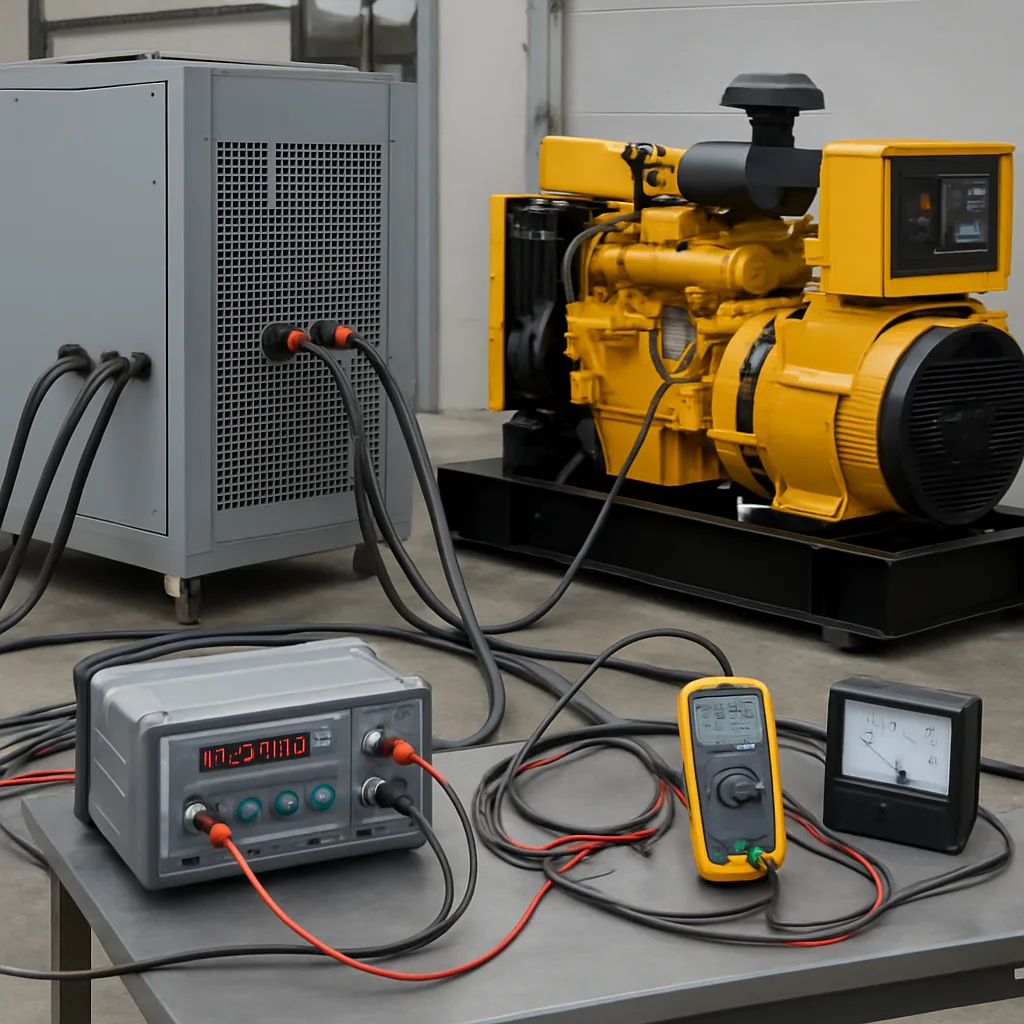
A run is not a test
What is generator load testing?
It is a run with a deliberate electrical load, observed. Voltage, frequency, coolant temperature, oil pressure and engine note are watched as the load comes on. A start with nothing connected can be healthy and still fail when the building connects.
A load bank is a controlled load. It is used when switching the building on would be unsafe, unclear, or not repeatable. The steps, often a series of increasing loads, show whether the set holds at each step. This guide does not name a certification standard or a pass mark. Those depend on why the test was booked and on the rating of that set.
Commercial and industrial sets are the usual reason for a formal load test: the question is whether the set can carry a defined load, not only whether it starts. If it already trips when load is applied, the trips-under-load page is the fault. The test may still be how that fault is shown, after the obvious restrictions are checked.
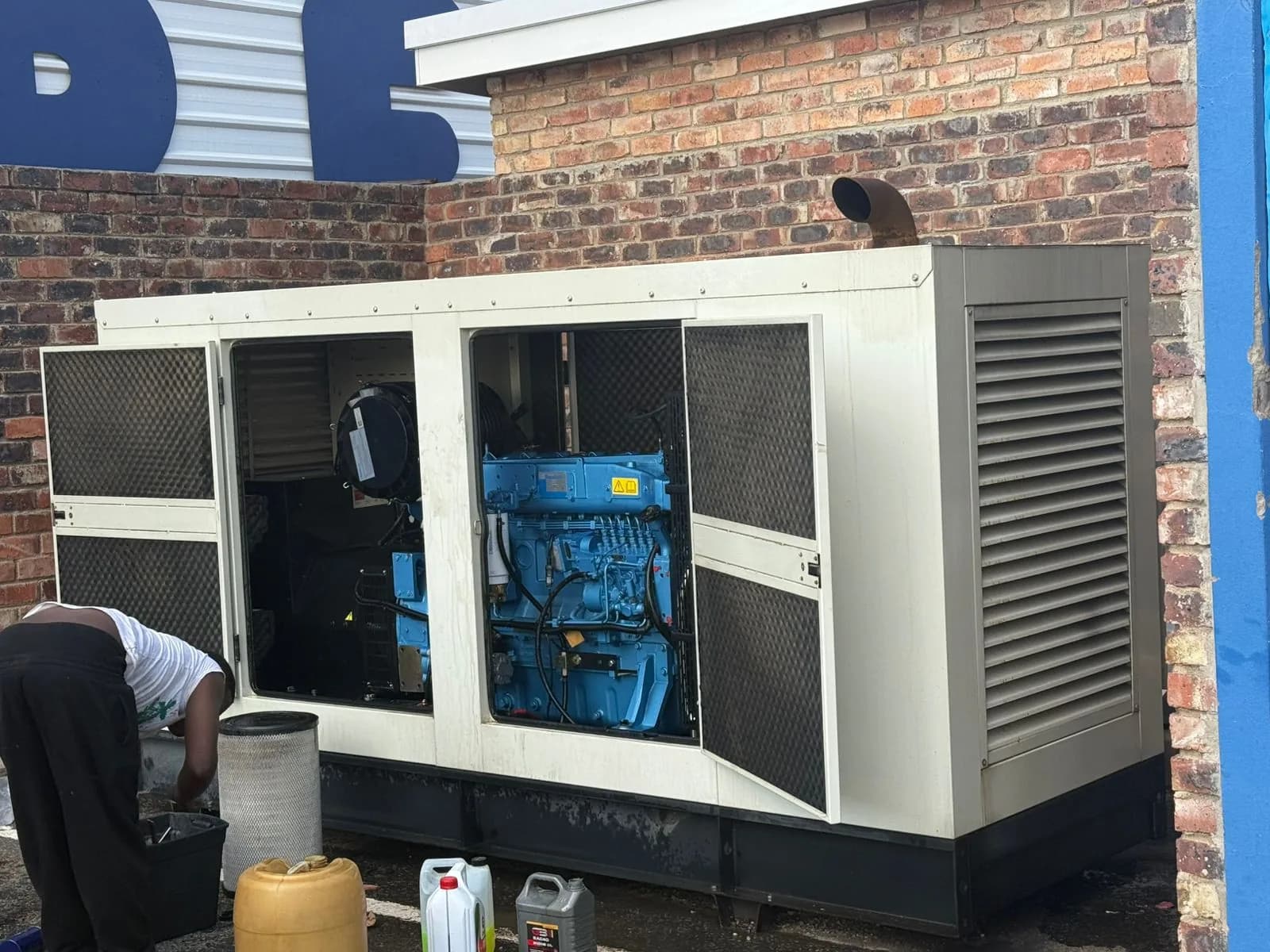
What is being watched
Why test a generator under load?
What is a load bank?
A device that draws a set amount of power from the generator so the test does not depend on whatever happens to be switched on in the building.
No-load versus loaded testing
No-load proves the engine starts and makes voltage. Loaded testing asks it to hold that voltage and speed while producing current. They answer different questions.
Voltage and frequency under load
Both can look correct at idle and sag once current is drawn. The readings are taken during the load, not only before it.
Cooling, engine and fuel
Temperature, engine note and fuel delivery show up under load. A cooling fault or a restriction can be invisible on a five-minute idle.
Load steps
Increasing the load in stages shows the point where voltage, speed or temperature leaves the expected band. The band is the set’s rating, not a universal percentage printed here.
When a load-bank test is useful
When you need a known load: after a repair, when capacity is in doubt, or when the building load is not a fair test. It is booked on the load bank testing page.
Related Pages
The test, the trip and the size
Google reviews of ProService Generator Repairs
Google Review
We suspected our aging plant was losing capacity, so they performed a load bank test. The detailed graphical report proved the alternator was struggling, allowing us to upgrade proactively.
Google Review
Very discreet and professional service for our property in Waterkloof. They managed the oil change and load test with zero mess or disruption.
Common Questions
Questions about generator load testing
What is generator load testing?
Running the generator against an electrical load while voltage, frequency and engine behaviour are watched.
What is a load bank?
Equipment that applies a known load so the test does not rely on the building’s circuits.
Is a load test the same as starting the generator?
No. A start with no load does not show whether the set can carry current, hold speed, or stay cool.
Why can a generator run fine with no load and fail under load?
Fuel, cooling, alternator capacity and engine power are only fully asked for when current is drawn. Idle hides those limits.
How is this page different from load bank testing?
This page explains the test. The load bank testing page is the service you book.
Do you certify the test to a named standard?
This guide does not claim a certification standard. What is recorded is agreed for that job and that generator’s rating.
The set already trips when we switch the building on. Do we start with a load bank?
Describe the trip first. A load bank is useful when a controlled load will show the fault. It is not a substitute for an obvious breaker, fuel or cooling fault.
Who usually needs this?
Sites that must know a commercial or industrial set can carry a defined load, not only start.
Still unsure what the fault is? Call or WhatsApp 082 057 4605 for onsite diagnosis.
Service Areas
Onsite visits across Gauteng
Technicians travel to the generator. These are the main Gauteng areas. Suburb pages sit under each region.
What to send before we attend
ProService Generator Repairs confirms an onsite visit from these details. Send what you have. A missing model number does not stop the booking.
- Location
- The suburb or site, so the visit can be booked in the right area.
- Make and model
- The generator brand and model, if they are known.
- kVA
- The size printed on the data plate.
- Fuel type
- Diesel, petrol, LPG, natural gas, or dual-fuel.
- Controller model
- The module name on the panel, when it is visible.
- Fault or alarm
- What the set does, and any text on the screen.
- Photos
- The generator, the data plate, and the controller or alarm. Send these on WhatsApp.
Book a Visit
Say what you need the test to prove
Capacity, a fault that only appears under load, or a check after a repair. The kVA from the plate helps.
- Call
- 082 057 4605
- Message us on WhatsApp